

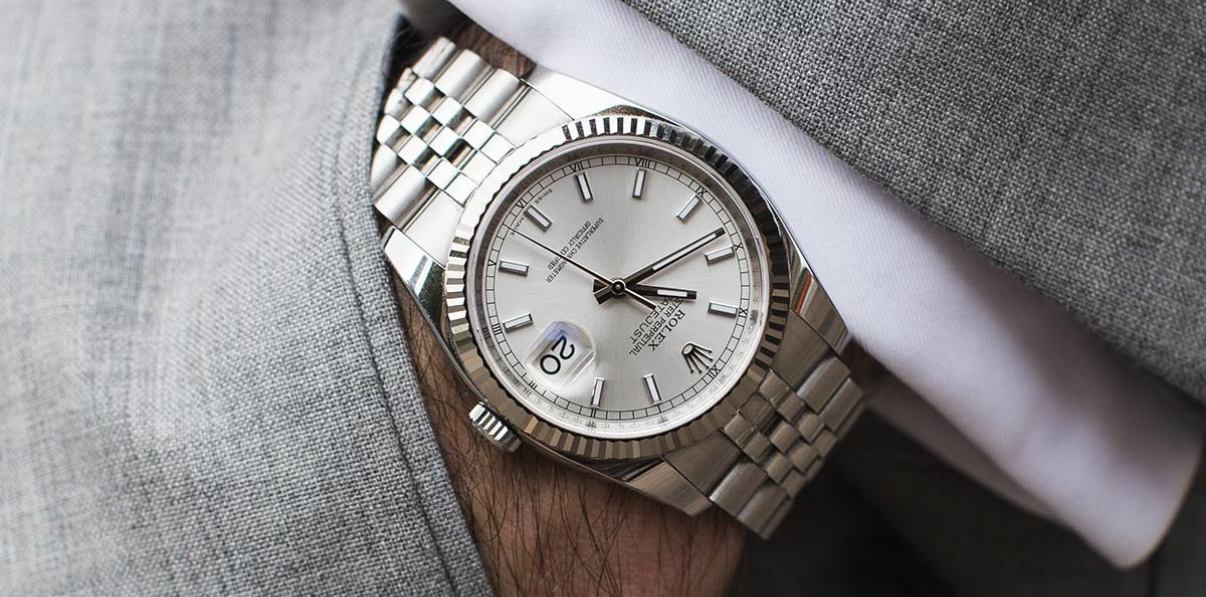
How to Set and Wind a Rolex Datejust Correctly (Step-by-Step Guide)
A step-by-step guide explaining how to correctly set the time, date, and wind a Rolex Datejust without damaging the movement.
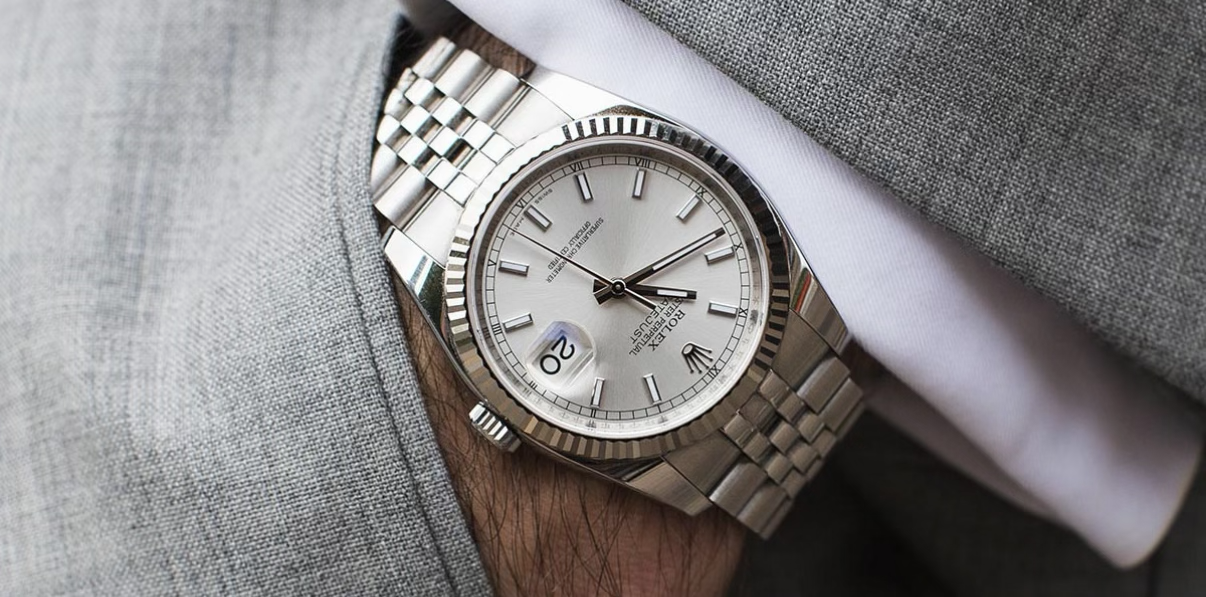
The Rolex Datejust is one of the most iconic automatic watches ever made. While it’s built to be robust, setting it incorrectly especially the date can damage the movement over time.
This guide explains the correct way to set the date, time, and wind a Rolex Datejust, step by step, so everything functions exactly as it should.
Understanding the Rolex Datejust Crown Positions
A Rolex Datejust crown has four distinct positions:
Position 1 – Screwed In
The normal position. The crown is fully screwed down and the watch is sealed and water-resistant.
Position 2 – Unscrewed (Winding Position)
The crown is unscrewed but not pulled out.
Used to manually wind the watch.
Position 3 – First Click Out (Date Setting)
Used to set the date only.
Position 4 – Second Click Out (Time Setting)
Used to set the time.
This position stops the seconds hand (hacking).
Step 1: Unscrew the Crown
Turn the crown anti-clockwise until it releases.
Once unscrewed, the crown will sit in Position 2 (winding position).
Do not pull or force the crown.
Step 2: Set the Date (Do This First)
From Position 2, gently pull the crown out one click to Position 3.
Then:
Rotate the crown to advance the date
Stop once the correct date appears
Do not do this if the time is between 9:00 PM and 3:00 AM
⚠️ During this time window, the date mechanism is engaged. Changing the date can damage internal components.
Step 3: Set the Time
Once the date is correct:
Pull the crown out one more click to Position 4
Turn the hands clockwise only
Watch for the date to change, this confirms you’ve passed midnight
Continue setting the correct time, making sure AM or PM is correct
This ensures the date changes at the correct time each day.
Step 4: Wind the Watch
After setting the time:
Push the crown back in to Position 2
Turn the crown clockwise (towards 12 o’clock)
Wind approximately 5–10 turns
You’ll feel smooth resistance stop once the watch feels fully wound.
✅ Helps maintain accuracy
✅ Prevents the watch stopping
✅ Especially important if the watch hasn’t been worn recently
Step 5: Secure the Crown
Push the crown back in and screw it clockwise until it is snug.
Do not over tighten firm pressure is enough to maintain water resistance.
Common Mistakes to Avoid
Changing the date between 9pm and 3am
Pulling the crown without unscrewing it
Turning the hands backwards
Forgetting to wind the watch
Leaving the crown unscrewed
Most Date-just issues are caused by incorrect setting rather than wear.
Final Advice
The Rolex Date-just is built to last a lifetime, but correct handling is key. Taking a moment to follow the proper setting order protects the movement and keeps everything running exactly as intended.
If anything feels stiff or unusual, stop forcing a Rolex crown is never the answer.
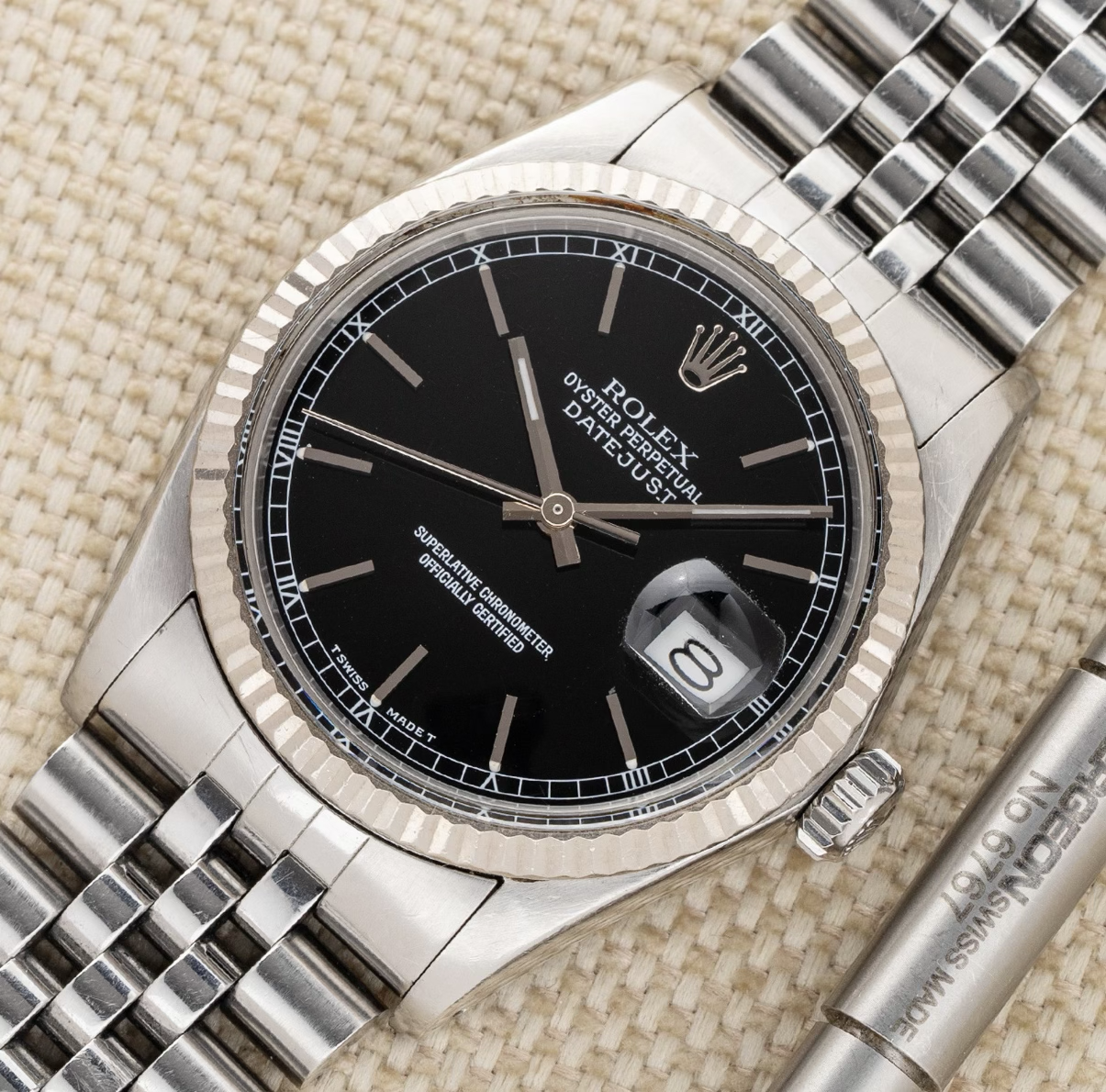
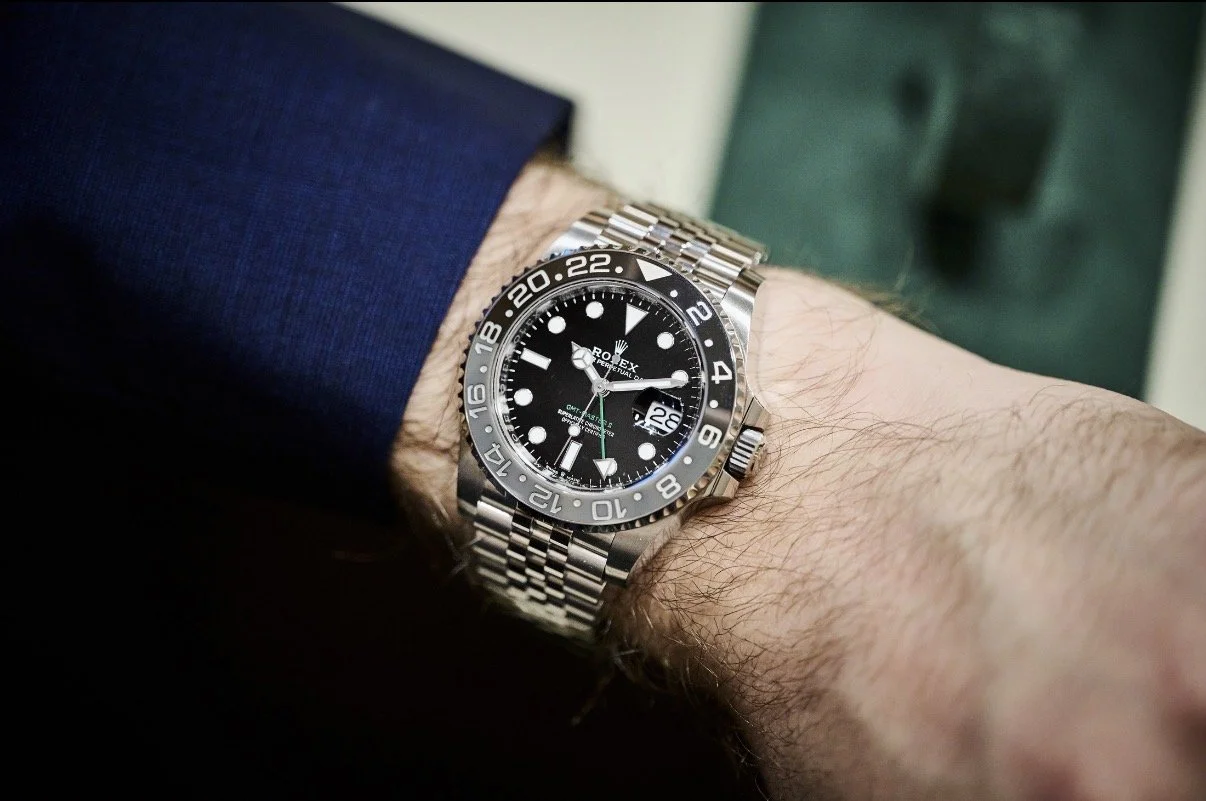
How to Change the Time and Date on a Rolex GMT-Master II (Correct Method)
A step-by-step guide explaining how to correctly change the time and date on a Rolex GMT-Master II using the jumping hour hand.
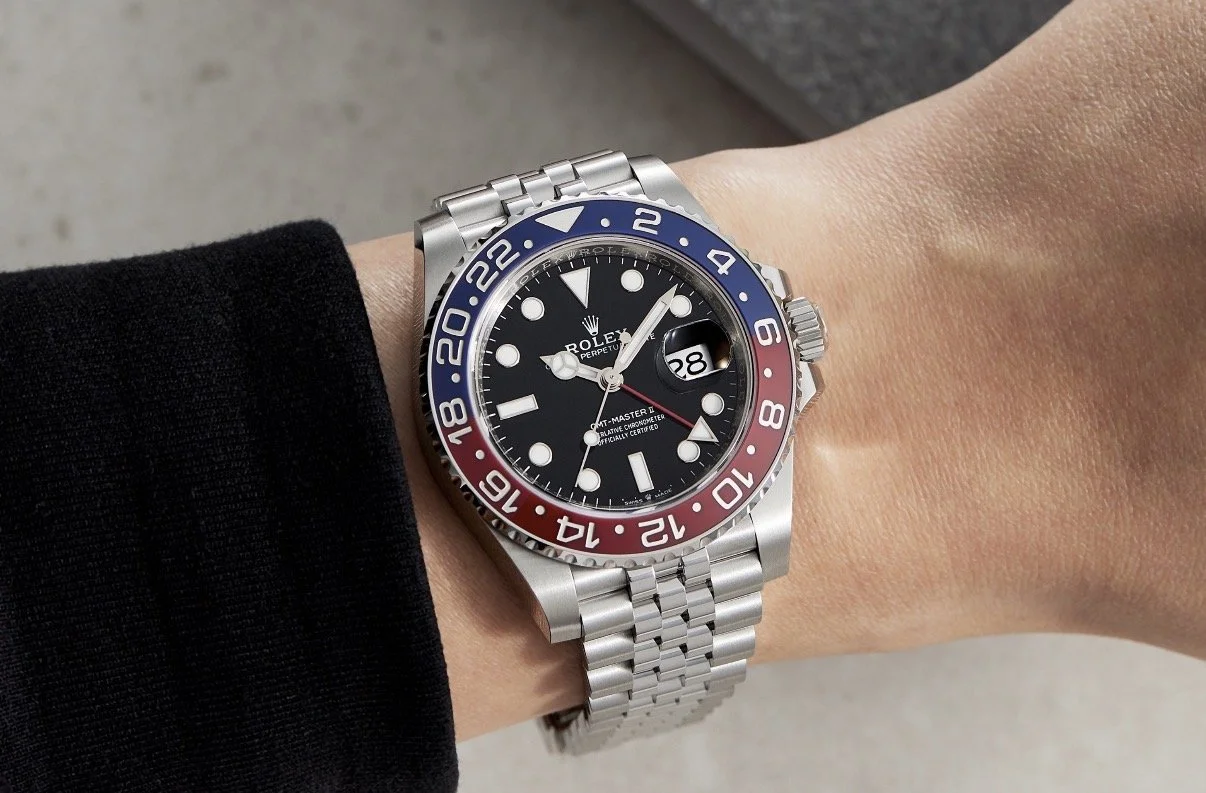
The Rolex GMT-Master II is designed differently from most automatic watches.
Thanks to its independently adjustable hour hand, you can change the time and date safely without stopping the movement if it’s done correctly.
This guide explains exactly how to change both the time and the date, without damaging the watch.
Understanding the Rolex GMT-Master II
Unlike standard date watches, the GMT-Master II features:
⭐️ A jumping local hour hand
⭐️ A 24-hour GMT hand (home time)
⭐️ A date mechanism linked to the local hour hand
This means the date changes when the hour hand passes midnight, not via a traditional quickset.
Crown Positions Explained
The crown has three positions:
1. Screwed in – normal, water-tight
2. First click out – adjusts local hour hand & date
3. Second click out – adjusts all hands together
⚠️ There is no separate quickset date wheel like on a Submariner or Datejust.
How to Change Local Time (Travelling)
This is the most common adjustment.
Step-by-Step
1. Unscrew the crown (anti-clockwise)
2. Pull the crown to the first click
3. Rotate the crown to move the hour hand forward or backward
▪️ The minute and GMT hands stay still
▪️ Accuracy is not affected
4. Push the crown back in and screw it down
✅ Safe
✅ Does not stop the watch
✅ Designed for frequent use
How to Change the Date on a Rolex GMT-Master II
Unlike most watches, the date is changed by moving the hour hand, not by a separate date-set position.
Correct Method
1. Unscrew the crown
2. Pull the crown to the first click
3. Rotate the crown forward until the hour hand passes midnight
4. Each time the hour hand crosses midnight, the date advances by one day
5. Continue until the correct date is shown
6. Push the crown back in and screw it down
💡 You can move the hour hand forwards or backwards to reach the correct date faster.
Why This Is Safe (Important)
On a GMT-Master II:
⭐️ The date mechanism is disengaged during hour-hand adjustment
⭐️ There is no traditional “danger zone” like on standard date watches
⭐️ Rolex designed this system to be used at any time of day
That said:
✅ Always turn gently
✅ Never force resistance
How to Set Home Time (GMT Hand)
This is usually done once.
Steps
1. Unscrew the crown
2. Pull to the second click
3. Set:
▪️ Minute hand
▪️ GMT hand (points to 24-hour scale)
4. Push crown back in and screw down
Common Mistakes to Avoid
⭐️ Trying to “quickset” the date like a Submariner
⭐️ Using the second crown position for daily time changes
⭐️ Forgetting to screw the crown back down
⭐️ Forcing the crown when resistance is felt
Key Takeaways
✅ Date is changed via the jumping hour hand
✅ Use first crown position only
✅ No quickset date wheel
✅ Designed for frequent time-zone changes
Final Advice
The Rolex GMT-Master II is one of the most intelligently designed travel watches ever made.
Once you understand how the hour hand and date are linked, setting it becomes fast, safe, and intuitive.

A Gentleman’s Guide to Watch Etiquette
A practical guide to watch etiquette, covering how to wear, choose, and match a watch correctly for every occasion.
A fine watch does more than tell time it speaks volumes about its wearer. From boardrooms to dinner dates, your timepiece can enhance your presence or undermine it depending on how you wear it. Here’s a modern gentleman’s guide to watch etiquette: how to wear it, when to wear it, and how not to come across like you’re trying too hard.
1. Match the Watch to the Occasion
Like shoes or cologne, the right watch depends on where you’re going.
Formal Events: Go with a sleek dress watch thin case, leather strap, minimal dial. Think understated elegance.
Business Settings: Chronographs and steel watches are fair game, but keep it classy.
Casual Outings: Dive watches, field watches, or anything with a NATO strap are perfect.
Sports & Outdoors: Stick to digital or rubber-strap watches your Rolex doesn’t need a jog.
🚫 Avoid: Wearing a chunky diver to a black-tie wedding. Unless James Bond invited you personally.
2. Wear It on the Correct Wrist
Traditionally, watches are worn on the non-dominant wrist left for right-handers, and vice versa.
Why? It keeps the crown accessible and avoids damage from overuse or impact.
But hey, rules are guidelines. If it feels better on the other wrist, go for it but be intentional, not random.
3. Size Matters (Seriously)
Wearing a dinner-plate-sized watch on a slim wrist is like turning up to brunch in ski boots.
Ideal diameter is 38mm to 42mm for most wrists.
The lugs should not overhang your wrist.
The strap should hug not strangle your wrist.
✅ Pro Tip: When in doubt, lean toward smaller. Timeless > oversized.
4. Don’t Flash It Subtle Flex Only
A true gentleman never brags about his watch. If someone notices and compliments it, great. But avoid:
Casually dropping the brand into conversation.
Holding your glass just a little too high so everyone sees it.
Taking watch selfies at the dinner table.
Let the watch speak, quietly.
5. Keep It in Shape
A scratched, fogged, or poorly kept watch tells people you don’t respect what you wear.
Regularly clean your watch.
Service it on schedule.
Don’t wear it to bed, in the shower, or when chopping wood (unless it’s G-Shock time).
6. Respect the Strap Game
Changing your strap can transform a watch but don’t go overboard.
Leather = formal.
Steel = versatile.
Rubber/NATO = casual/sporty.
Switching straps is fine, but treat it like tailoring do it with purpose and style.
7. Don’t Double Up on Timepieces
Wearing a smart watch and a mechanical watch? That’s like wearing two pairs of shoes. Choose one.
If you need fitness tracking, go digital. If you’re going for elegance, go analog. Mixing both is confusing… for everyone.
Final Word: Timeless Style Is Effortless
Wearing a watch isn’t just about keeping time it’s about keeping style. A well-chosen timepiece signals taste, awareness, and self-respect. So wear yours like you mean it with confidence, class, and just enough mystery.
Need help choosing the right piece for your next occasion? Visit us at JF Jewellers or message us because style should always be on time.

Quartz vs Automatic Watches: Which One Should You Choose?
When it comes to choosing a new watch, one of the first decisions you’ll face is whether to go for a quartz or an automatic movement. Both have unique qualities, loyal followings, and different advantages depending on your lifestyle, preferences, and budget. In this article, we’ll break down the key differences and help you decide which is the right choice for you.
What Is a Quartz Watch?
A quartz watch is powered by a battery that sends an electrical current through a tiny quartz crystal. This causes the crystal to vibrate precisely 32,768 times per second. These vibrations are measured and converted into a consistent pulse that powers the motor and moves the watch hands.
🔧 Key Features of Quartz Watches:
Highly accurate: Usually lose/gain only a few seconds per month
Low maintenance: Battery replacement every 1–2 years
Affordable: Generally less expensive to produce and buy
Lightweight: Fewer mechanical parts make them thinner and lighter
No winding required
Ideal for:
Anyone who wants a reliable, low-maintenance, and budget-friendly watch they can wear daily without worry.
What Is an Automatic Watch?
An automatic (self-winding) watch is powered by a mechanical movement. It contains a rotor that winds the mainspring as your wrist moves throughout the day. No batteries required just motion.
⚙️ Key Features of Automatic Watches:
Mechanical craftsmanship: Built with intricate gears and components
Winding mechanism: Powered by movement or manual winding
Smooth sweep second hand: Unlike quartz’s “tick-tick,” automatics have a smoother hand motion
Heirloom value: Appreciated by collectors for artistry and legacy
Ideal for:
Those who appreciate traditional watchmaking, and enjoy the feel and aesthetic of a finely tuned timepiece.
Which One Is Right for You?
At JF Jewellers, we believe the choice between quartz and automatic comes down to how you use your watch and what you value most.
Choose quartz if you want something practical, reliable, and easy to maintain perfect for daily wear.
Choose automatic if you love craftsmanship, history, and wearing a timepiece that tells more than just the time.
We stock a wide selection of both quartz and automatic watches from budget-friendly pieces to luxury brands. Whether you’re a first-time buyer or a seasoned collector, our team is here to help you find your perfect match.
Need help choosing?
Contact us online, and one of our watch specialists will be happy to guide you.

Automatic vs. Chronograph Watches: What's the Difference?
A clear comparison of quartz and automatic watches, explaining how they work, their pros and cons, and which suits different lifestyles.
When shopping for a new timepiece, you’ve likely come across terms like “automatic” and “chronograph.” Though they may sound similar or even interchangeable, they refer to two completely different watch features. At JF Jewellers, we believe understanding these terms helps you make the right choice based on both style and function.
What Is an Automatic Watch?
An automatic watch is a self-winding mechanical watch. It doesn't need a battery because it winds itself through the natural motion of your wrist. Inside, a rotor spins and transfers energy to a mainspring, which powers the watch.
🔧 Key Characteristics:
Powered by motion
No battery required
Smooth, sweeping second hand
Often prized for their craftsmanship and classic aesthetics
Automatic watches can come with a wide range of complications (features), but the term “automatic” strictly refers to how the watch is powered not what it does.
What Is a Chronograph Watch?
A chronograph is a watch with a built-in stopwatch function. It usually has additional sub-dials and pushers (buttons) on the side that control the start, stop, and reset functions.
Chronograph watches can be quartz, mechanical, or automatic, meaning “chronograph” refers to the functionality, not the movement type.
⏱️ Key Characteristics:
Multiple sub-dials (e.g., 30-minute, 12-hour counters)
Pushers on the case for stopwatch control
Can time events while still displaying the current time
Sporty, functional appearance — often used in racing, aviation, and diving
Can a Watch Be Both?
Absolutely many watches are both automatic chronographs. These combine the best of both worlds: a self-winding movement and stopwatch functionality. They tend to be larger, more complex, and often more expensive due to the engineering involved.
Which Should You Choose?
Choose an automatic watch if you appreciate traditional watchmaking, a minimalist design, and prefer a battery-free experience.
Choose a chronograph watch if you need additional functionality (like timing events) or prefer a bolder, sportier style.
Whether you're drawn to the elegance of an automatic or the utility of a chronograph, JF Jewellers has a curated selection to match your needs.
Need help picking the right model?
Get in touch with our team we’re always happy to help you find the perfect timepiece.